

- Tiger Research stated Monad might change into monetary infrastructure for South Korea’s stablecoin, funds and RWA markets, citing quick settlement, low prices and world liquidity.
- The report stated Monad might elevate institutional capital effectivity by serving as a hub chain that settles and bridges funds throughout a number of blockchains, cost networks and CEXs.
- Tiger Research stated use of won-denominated stablecoins and RWAs will broaden in South Korea’s digital-asset market by 2030, and that home monetary establishments ought to pursue each the tokenized securities regime and public chains.
Forecast Pattern Report by Interval


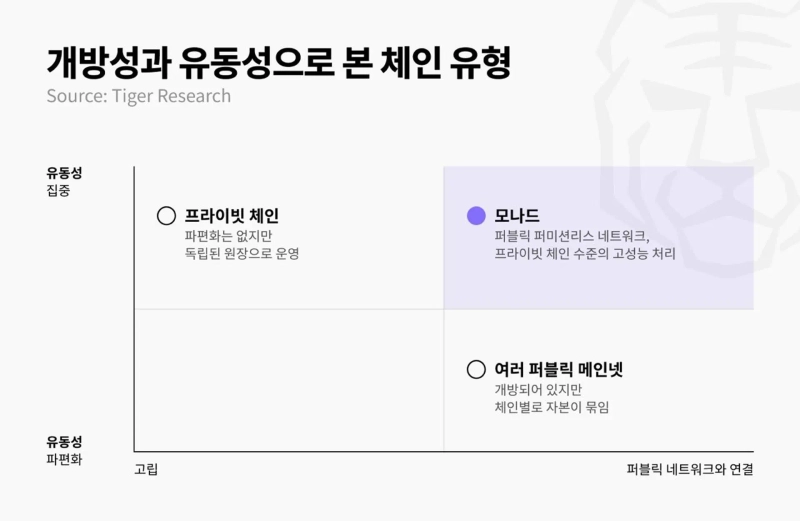
As South Korea’s digital-asset market shifts from buying and selling towards competitors to construct actual financial-service infrastructure, high-performance Layer 1 blockchain Monad stands to see broader use, in line with a brand new report.
Tiger Research, a Web3-focused analysis agency, stated Oct. 6 in a report titled “Monad’s View on South Korea’s Digital-Asset Market in 2030” that Monad could possibly be used as monetary infrastructure for the nation’s stablecoin, funds and real-world asset, or RWA, markets. The report cited quick settlement, low prices and hyperlinks to world liquidity.
It highlighted Monad’s potential to perform as a “hub chain” that settles and bridges fund flows scattered throughout a number of blockchains, cost networks and centralized exchanges, or CEXs, whereas reallocating liquidity in a single place. That would cut back the necessity for establishments to disperse capital throughout a number of chains and enhance capital effectivity.
Tiger Research additionally projected that by 2030, won-denominated stablecoins will set up themselves as funds infrastructure that enhances, slightly than replaces, current card and settlement techniques. With commerce accounting for about 85% of South Korea’s gross home product, the agency expects higher use in business-to-business transactions and cross-border settlement than in shopper funds.
The RWA market can be anticipated to shift away from easy asset issuance towards distribution and administration. As a result of stablecoins, funds and RWAs all require quick settlement, low charges and ample liquidity, high-performance public blockchains such as Monad might see wider use, the report stated.
The agency stated South Korean monetary establishments must pursue each the home institutional market and offshore markets. In South Korea, which means securing account-management establishment standing and laying the groundwork for stablecoin-related partnerships forward of the tokenized securities framework scheduled to take impact in February 2027. Abroad, establishments must construct expertise distributing Korean property overseas by means of world distribution networks and public chains.
Yoon Seung-sik, head of analysis at Tiger Research, stated the South Korean digital-asset market in 2030 will probably be led by establishments that transfer into real-world deployment as guidelines are established and infrastructure is constructed.
“What is required shouldn’t be one other research or pilot undertaking, however a call to function Korean property on precise infrastructure,” Yoon stated.