A trillion-dollar British asset supervisor simply put its rising market bond fund on Solana, and Wall Avenue is watching carefully. However the relationship between tokenized funds and SOL demand is much extra difficult than most crypto traders assume.

This submit could comprise hyperlinks from our sponsors and associates, and Flywheel Publishing could obtain compensation for actions taken by them.
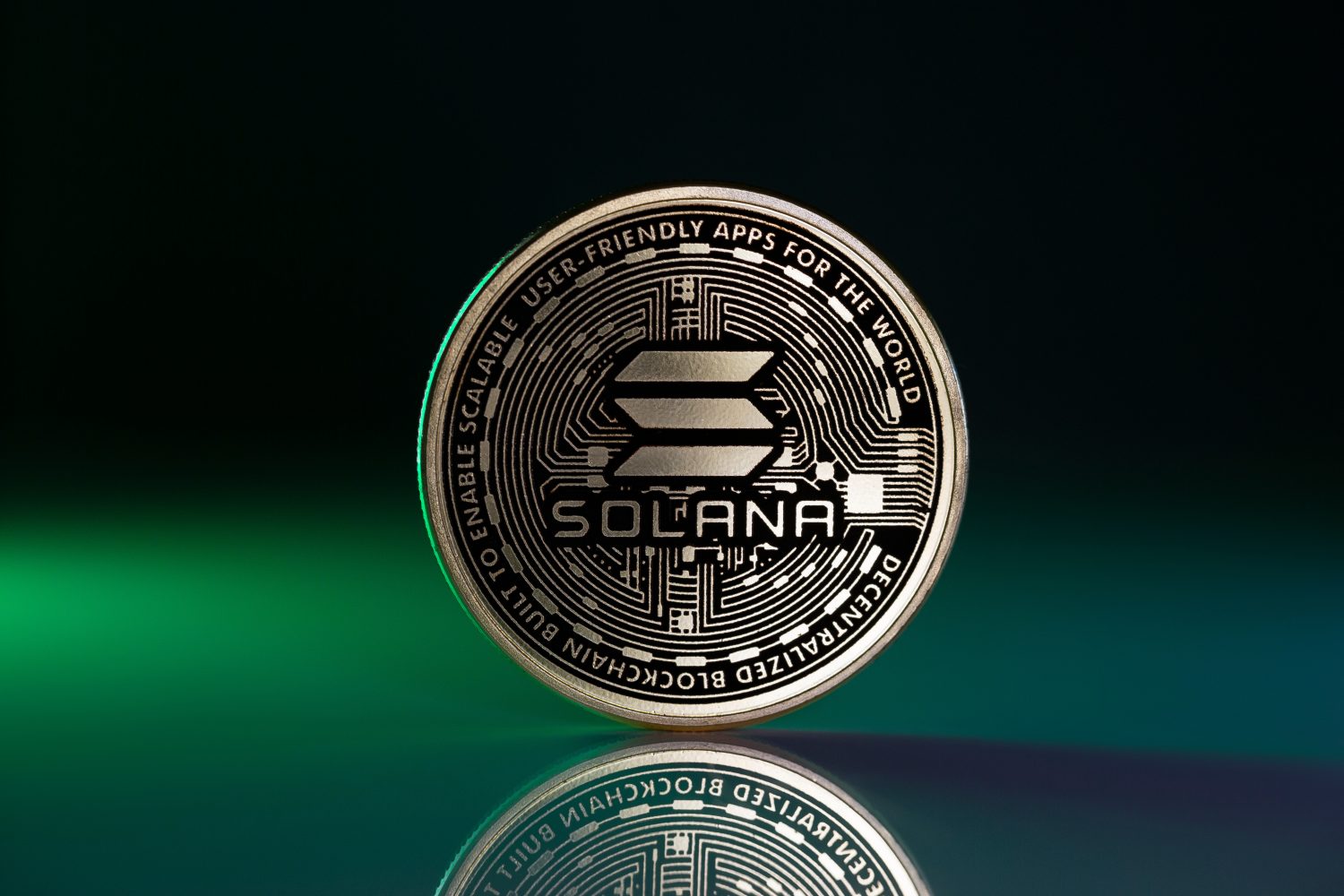
Schroders, a main British asset supervisor with roughly $1.1 trillion in property underneath administration, has launched its Rising Market Bond Fund on the Solana (CRYPTO:SOL) blockchain. This marks the agency’s inaugural enterprise onto the community. Centrifuge unveiled the Solana tokenized fund, which offers the expertise for the sort of funding product.
SOL is buying and selling at $97, reflecting a 3.3% enhance over the previous 24 hours. Regardless of this day by day acquire, the token stays down 19.7% over the past month and 67% under its all-time high of $293 recorded on January 19, 2025. Whereas the latest worth uptick lacks a clear correlation to Schroders’ fund, the longer-term decline suggests a continued battle to draw consumers.
All through 2026, a number of outstanding Wall Avenue names have introduced tokenized products on Solana, main SOL holders to view every new launch as a signal of accelerating institutional curiosity. However does the launch of a bond fund by a trillion-dollar asset supervisor actually create shopping for strain for SOL?
How Schroders’ Solana Tokenized Fund Works
A tokenized fund is actually a conventional funding fund whose shares are represented as tokens on a blockchain. This setup permits traders to carry and commerce their shares by digital wallets at any time. Centrifuge offers the expertise that permits this course of, managing sensible contracts, investor lists, and on-chain fund information, whereas additionally working an asset administration division known as Anemoy.
This new fund is a part of the Schroder Worldwide Choice Fund, which falls underneath Schroders’ Luxembourg fund vary. The fund goals to realize capital development and revenue that surpass an rising market bond benchmark. Rising market debt typically refers to bonds issued by governments and corporations in growing economies, which generally supply greater rates of interest as a result of lenders take on larger threat.
At present, Schroders and Centrifuge haven’t disclosed the scale of the Solana fund, its minimal funding requirement, or the sorts of traders who could take part. As an institutional product, it’s seemingly open to pension funds, insurance coverage firms, {and professional} traders.
Schroders Earns the Similar Sort of Payment on Solana as in Luxembourg
Schroders primarily generates income by administration charges, a proportion of consumer property expressed in foundation factors (one-hundredth of a proportion level). The charges for the Solana model of the bond fund would be the identical as these of the Luxembourg counterpart, because the blockchain merely modifications how traders entry the fund.
Schroders has been exploring this avenue for fairly a while. The agency beforehand performed a pilot program for tokenized insurance-linked securities and secured approval from the Central Financial institution of Eire for a tokenized cash market fund. Moreover, Centrifuge operates a vault for the identical Schroders bond fund on Ethereum, which launched on October 28 and is denominated in USDC, a stablecoin pegged to the U.S. greenback, in keeping with vault tracker Buying and selling Technique.
Wall Avenue’s Solana Funds Use SOL Solely for Community Charges
Traders within the new fund will transact utilizing stablecoins, which means SOL comes into play solely because the community price required to conduct transactions on Solana. These charges are comparatively low. A portion of every base price is burned, whereas the rest helps validators—the operators who keep Solana’s community and stake SOL to facilitate transactions.
Moreover, neither Schroders nor Centrifuge has dedicated to buying, holding, or staking SOL as a part of their operations. Institutional bond funds sometimes see rare subscriptions and redemptions, which means far fewer transactions than the continuing buying and selling wanted to drive price income.
The Solana Basis, which advocates for the community’s development, famous on X that “Schroders has 30+ years in rising market debt. Now it’s exploring distribution by traders’ wallets.” The phrase “exploring” precisely displays Schroders’ intention to check a new gross sales channel with out guaranteeing a vital allocation to Solana.
JPMorgan and BlackRock Already Run Tokenized Funds on Solana
Schroders faces a aggressive panorama. Notably, JPMorgan Chase (NYSE:JPM | JPM Price Prediction) launched its MONY and JLTXX tokenized money market funds on Solana in October after predominantly working on Ethereum. Moreover, BlackRock (NYSE:BLK) launched a tokenized cash market fund aimed toward stablecoin reserves on each Solana and Ethereum. Every agency makes use of a number of blockchain platforms, permitting Solana to function its merchandise with out relying completely on the community. Throughout this crowded interval, SOL’s worth even declined over the 30 days that included JPMorgan’s entry.
Does Schroders’ Solana Fund Create Demand for SOL?
In conclusion, the reply seems to be no, or at finest, little or no. The brand new fund doesn’t considerably generate demand for SOL, and Schroders appears to face to achieve way more from this launch than the cryptocurrency itself. This enterprise presents the agency an environment friendly strategy to attain crypto-focused establishments that deal in stablecoins. As for Centrifuge, it provides one other well-respected supervisor to its roster following the latest launch of the JQQQ fund by Janus Henderson (NYSE:JHG) on October 27 and an funding from Coinbase (NASDAQ:COIN) on Could 5. General, SOL’s future stays unsure amidst these developments.
Contact [email protected] for any questions or corrections.